Rarely do you get to work with an unlimited budget in any part of business, and digital marketing is no exception. So, finding a way to maximize your spending allotment in a way that still generates results is essential to staying competitive and successful online.
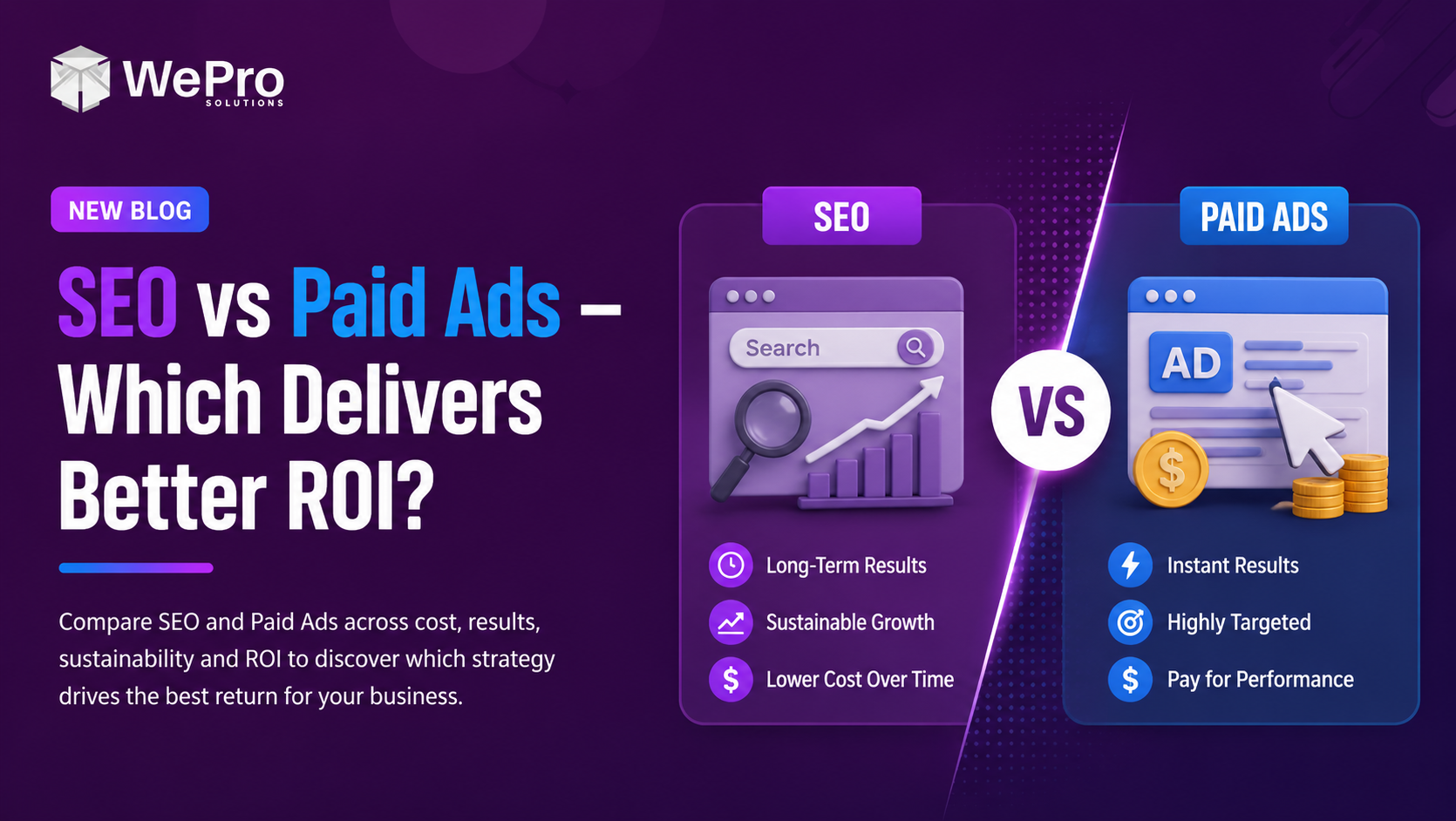
Two of the most common digital marketing strategies companies rely on to get these results are SEO and paid advertisements. SEO is a cheaper (or free if doing it yourself) option focused on setting up your website and content in a way that will naturally push you higher on search engines – leading to more clicks and awareness. Paid ads are what you’re likely thinking of – strategic, paid placement of your content in front of specific audiences.
Both have their time and place, but understanding when each has a better ROI will help you know where to focus your efforts and how each can benefit your company.
To help you find real success online, let’s break down when SEO, paid ads, or a combination of the two will deliver the greatest return.
To know which strategy will help garner the best results for your company, let’s start with breaking down what each strategy entails.
Search engine optimization (SEO) is creating your website in a way that leads to higher rankings on the results pages of search engines, particularly when people search for terms related to your services, location, or audience. This is organic – or unpaid – traffic that finds your website naturally because of how the site is set up.
There are several key components that make up a truly successful SEO strategy:
Having a site with good SEO is beneficial for your business long-term because it’s a cheaper way to draw people to your website, increasing leads and sales.
Like the name states, paid ads are content that you strategically place in front of certain audiences based on a number of characteristics (location, age, interests, shopping habits, etc.) by paying for it. Pay-per-click (PPC) advertising is a form of this. With PPC, you pay a search engine when someone actually clicks on the link they display in their results – essentially buying visits to your website from your desired audience.
There are several popular platforms when it comes to PPC, primarily Google Ads, Microsoft Ads, and social media. Google Ads and Microsoft Ads are more focused on search engine results – leading people to the site when they search for relevant terms. Social media advertising on the other hand is creating a post that shows up on the feeds of people who match your target audience and leading them to your site.
Paid ads tend to create more immediate visibility for your site that SEO and can have more targeted efforts, but they also cost more over time.
To really know if you’re getting your money’s worth from your digital marketing efforts, you have to know what to look for. Just seeing if you’ve had more visitors to your site or new followers is great, but that doesn’t tell the full story on how impactful your digital strategy is for your overall success. Some key metrics to track to better understand you ROI include:
These metrics will help you understand not just how much traffic or engagement you’re getting from your digital marketing efforts, but how much money you’re making (or have the potential to make) because of them. This means being able to fully understand if the money you’re spending is worth it.
For SEO, several of the key advantages are centered around lower costs over time and a more organic traffic flow. Three of the main ROIs SEO provides are:
Because SEO is a cheaper option than paid ads, it’s easy to think it naturally will lend you a higher ROI. While that may be the case for some businesses, there are also several advantages to paid ads. Some of the top ones include:
SEO is essential to any successful website, but when trying to decide if you should spend money on it or do it yourself, here are some key things to consider:
If any of these situations fit your business, SEO is likely the better investment for your company. They’ll provide you with more sustainable lead generation and a stronger online presence for lower long-term costs.
Paid ads absolutely have their advantage, especially in you have room for them in the budget. When deciding if you should spend the money on an ad or go with a more organic strategy, here are some ideal situations to consider:
Paid ads are going to provide you with faster lead generation, more immediate visibility, and more predictable campaign performance over time.
SEO and paid ads both have their pros and cons, which means they each have their time and place to shine. If you’re looking to achieve a well-rounded digital and web strategy, that’s typically going to come from utilizing both methods.
Understanding when SEO is the best bet and when to place an ad is the key. And once you know that, sharing keyword and audience insights between each strategy will help push all your efforts forward – higher search engine rankings, more effective ad spends, and an overall higher marketing ROI.
Navigating the crowded and evolving digital landscape is a tall task. As a digital marketing company in Texas, we fully understand how complicated it is and strive to make it less stressful for business of all sizes and industries.
Whether you’re looking to grow organic traffic through SEO or generate immediate leads with paid advertising, we’re here to help you maximize your digital marketing ROI and grow your presence online. Send us a message to start the conversation!