First impressions are critical. And when it comes to business, those typically happen online.
Your website is where most people come across your company for the first time, and they make decisions quickly on if they want to do business with you based on what they see and experience. If your site isn’t fast, secure, engaging, and user-friendly, they’re more likely to move on to something that is.
Not to mention, if you’re missing those elements, you’re SEO scores suffer, making it harder for people to come across your site in the first place.
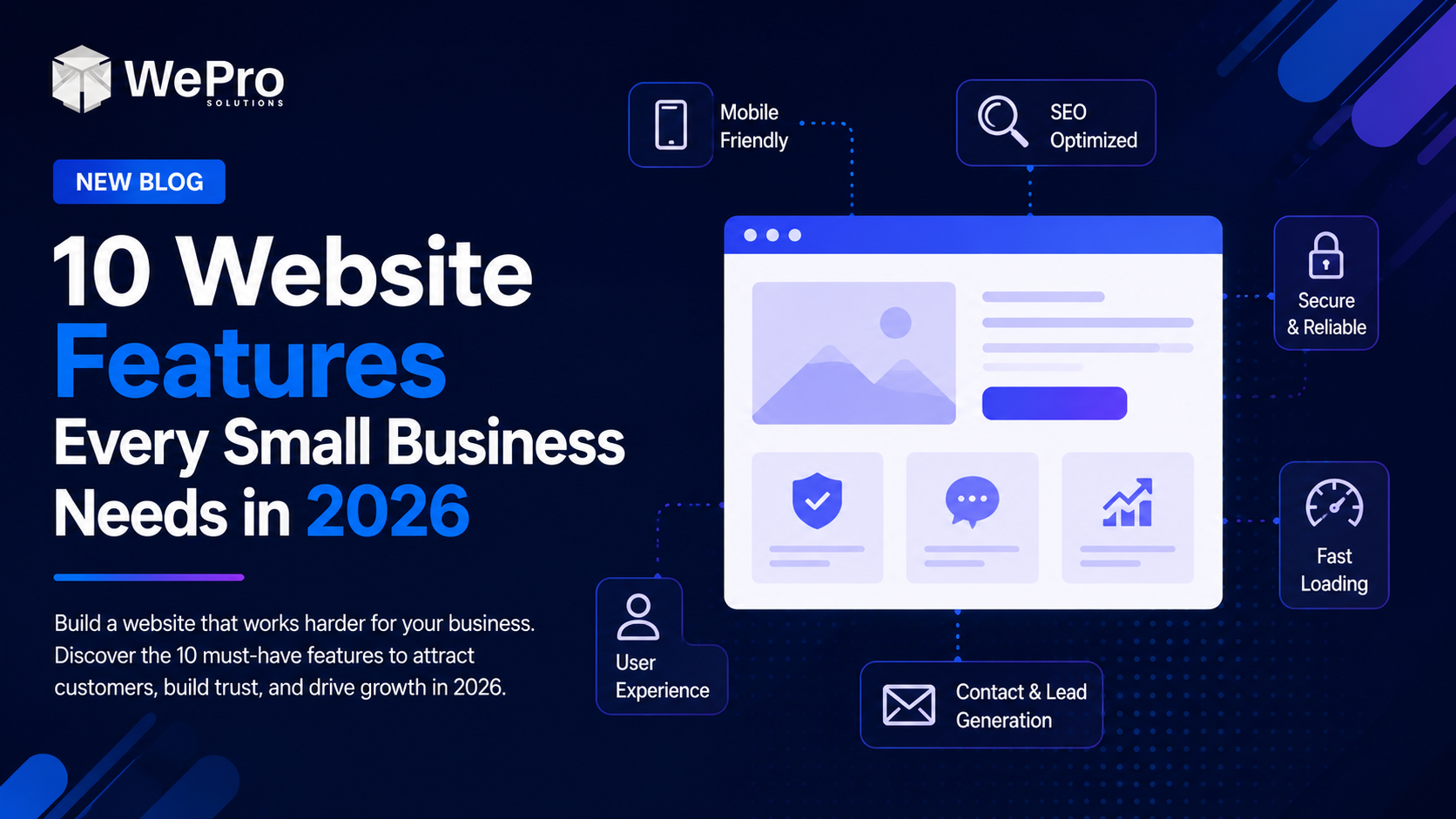
To help avoid this, here are 10 essential website features every small business needs in today’s digital age in order to stay competitive:
Most people are visiting websites on smartphones, so your website has to be responsive – meaning it’s designed to fit any screen size. Without that responsive design, your site looks weird and can be hard to navigate, turning people away instead of drawing them in. Part of this design includes clear, touch-friendly buttons and CTAs, and fast loading speeds.
The more mobile-friendly your website is, the better your SEO will be. Search engines take that mobile responsiveness into account, so you need it to push your site higher up the search engine rankings.
People have short attention spans online, so your site needs to load quickly to capture attention – within seconds is typically what people expect. Having that fast speed improves the overall user experience, as well as search rankings and responsiveness. On the other hand, slower speeds are going to lead to higher bounce rates.
If you’re looking to improve your site speed, try clearing out any unused media or plugins, optimizing your images, and utilizing features like browser caching, good hosting, and clean code.
Once you have people on your site and looking around, they should feel guided to take some type of action. Whether you’re wanting them to contact you, make a purchase, sign up for a newsletter, or anything of the sort, you need to make it clear what you want them to do it, and how they should get there. Clear, strategically placed CTAs can increase conversions and make people feel more inclined to act.
Think of buttons asking people to send a message, request a quote, shop online, or anything of the sort. Making those engaging and attention grabbing can help turn thought into action.
With how much information your site holds – both for your customers and company – it needs to be secure. Customers tend to trust sites that are clearly secure – have SSLs, secure forms, password protection, etc. – more because they know their information is less likely to end up in the wrong hands. And search engines like secure sites more as well.
To ensure your site is secure, make sure to routinely update your site and server, have malware protection installed, perform maintenance and security checks, and stay on the lookout for any bugs.
If you’re looking to boost your business (both online and in person), prioritizing reaching people in your local area is key. Having strong local SEO is central to this because it helps land your business in front of people in your area when they are looking for your services locally.
To achieve this, focus on optimizing your title tags, meta descriptions, and Google Business profile with local keywords and having location pages that focus on your work in the area.
When people are checking out a site online, and especially if they’re looking to make a purchase, they need to be able to easily find what they’re looking for. This is where your navigation comes into play.
Having simple, clean navigation enhances the user experience – it reduces frustration, keeps visitors engaged, and improves the overall look of your site. Having clear, concise menus, logical page organization, a search function, and noticeable contact information makes your site easier to scroll through for everyone.
People are more likely to trust sites and businesses that others have had good experiences with. The way they find this information is through customer reviews. Theses trust signals make your company feel more real – like you’re a brand that people can and should trust. This reduces people’s hesitation to work with you, leading to more conversions and better relationships.
To display these reviews, pulling from multiple sources helps people know you’re not just picking the top comments that make you look good. Using Google Reviews, case studies, testimonials, awards, and links to previous clients allow people to get a full picture of the work you do for others and what they can expect from you.
AI is a widely debated topic now, but when used properly it can complement your work and help you build better relationships – without replacing your team. Utilizing AI on your site allows you to automate parts of your workflow, be more available to customers, and ultimately keeps you current with the times.
Some ways you can integrate AI within your site include AI chat assistants, 24/7 customer support, and even appointment scheduling. Finding a way to bring AI into your site will show you’re embracing technology while also relying on human support.
Read more about how AI can be beneficial in your digital marketing strategy!
People expect the content they see on your site to be updated. If not, you’re losing their attention quickly. From blog posts and services, to promotions, photos, and contact information, you need to be able to make quick edits on your site yourself – without the help of an outside web development partner.
A content management system allows you to do just this – make continual updates to the content on your site in a way that’s easy to understand and quick to do. This keeps your site current, fresh, and reliable.
One of the biggest tools businesses have in their arsenal is the data and analytics that come from their website and digital marketing strategies. These give you insights into your audience, your site, your business, and can give you a clear path forward if you know how to decipher them. Some key metrics you should be looking at include:
These can tell you what parts of your site are working properly, what might be falling behind, and how you can pull more visitors in. To help you better analyze your stats and make data-driven decision, you can use tools such as Google Analytics and Google Search Console.
In today’s digital age, websites don’t just exist as a brochure for your business. Instead, they’re living entities that help you actively generate business, build relationships, and expand your brand.
By ensuring that you have these 10 features within your website, you’re more likely to have a site with good user experiences, SEO results, credibility, and conversions. And if you don’t already, investing in them now will help keep you competitive in 2026 and beyond.
As a web design, development, and maintenance company, we understand first-hand how important having a strong website is to your digital identity. We also know the struggle of keeping up with your website and ensuring that’s it’s helping your business rather than hurting it.
If you’re ready to evaluate your website to make sure it has these key features – or even if you know you’re missing some and want help getting caught up – send us a message! Our team is here to make sure your site is a standout online!