It’s easy to think that simply having a website is good enough in today’s online-focused world. But the reality is that a bad website can have more of a negative impact on your business than a good one can benefit you.
Nowadays, your website is more than just your digital storefront – it’s your first impression, your attention grabber, and one of the biggest tools at your disposal. So having an outdated website is taking that tool and using it against yourself. Your credibility, SEO scores, leads, user experience, and much more all suffer when your website isn’t up to par.
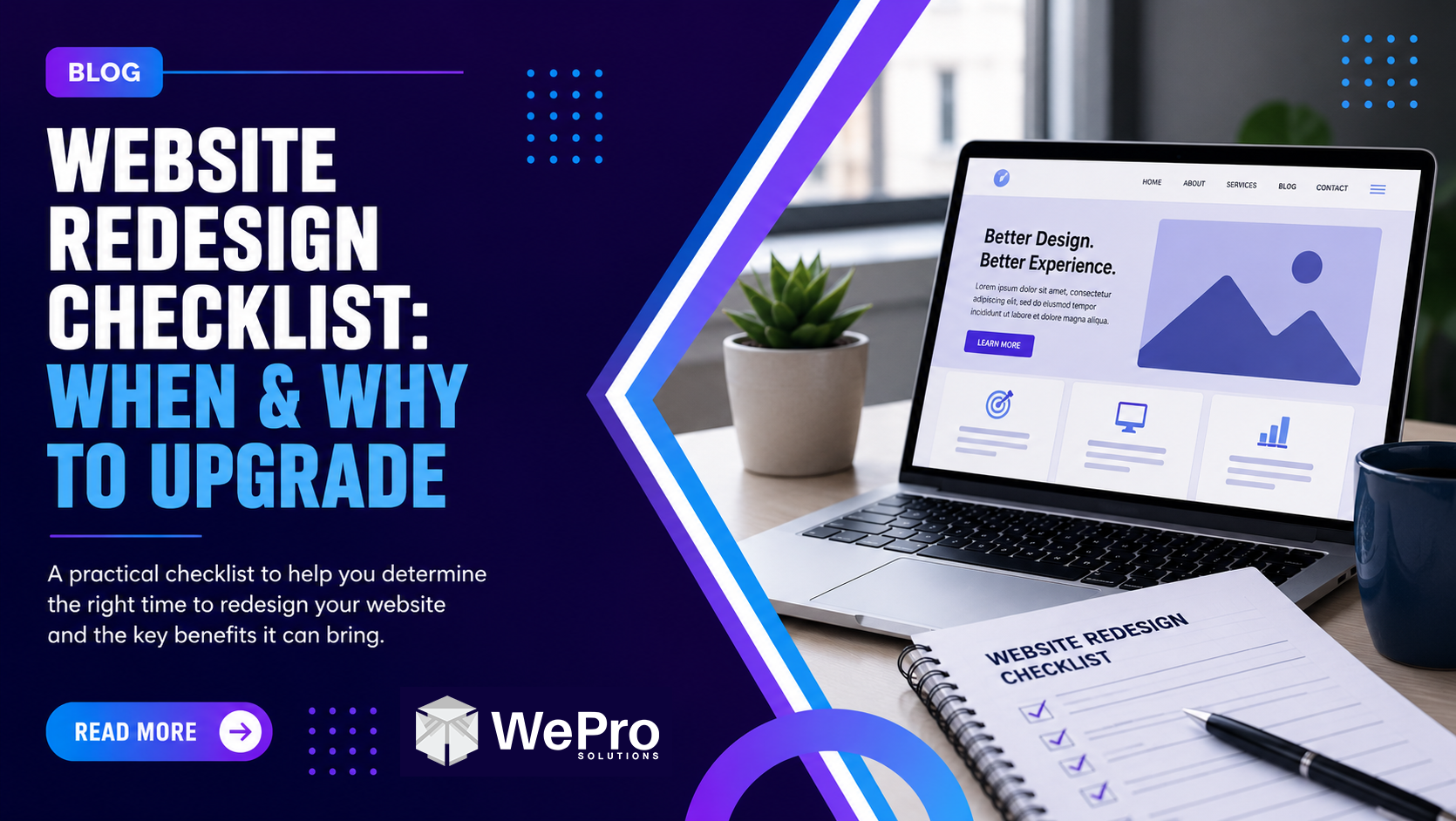
But knowing when – and how – to upgrade your site can be tricky. To help make the process easier, let’s talk through the signs it’s time for a redesign (including a redesign checklist) and the benefits of making the change.
Why Redesigns Matter
First impressions happen fast, especially when it comes to websites. When people visit a new website for the first time, they make a judgement about the site, the company, and the products in seconds. And with how crowded the online scene is, a bad first impression is hard to overcome.
When you have a clean, responsive, and engaging website, you’re more likely to draw people in and start building a relationship with them. This positive user experience directly correlates to leads and conversions. If people have a hard time navigating the site – whether that’s because of the menu, site speeds, layout, or responsiveness – they’re more likely to close out and not come back. That’s a potential sale you’re missing out on just because of how your site operates.
Redesigns also take SEO and evolving technology into account. A truly good SEO score – one that will push you higher up on search rankings and lead to more clicks – is based on several factors:
- Mobile friendliness
- Loading times
- Security
- Clean design
Between these and keeping up with plugin updates and browser compatibility, redesigns ensure your site is staying current and competitive.
Signs Your Website Needs a Redesign
There’s no set time limit for how long you should go between website redesigns. Instead, it’s more about when the various pieces of your site need to be updated to better serve your company and the goals you’re trying to achieve.
Whether it’s been a while since you touched up your site, or even if you just worked on it, here are 8 of the main signs it’s time for a redesign:
- Your website looks outdated: Your brand is the heart of your business, and your website should reflect it well. That means old fonts, media, layouts, or even previous branding elements need to go and more current visuals need to take over.
- Your site isn’t mobile friendly: Most people visit websites for the first time on a mobile device. So, if your site isn’t set up to work properly on a smaller screen size, you’re likely going to have a bad impression from the get-go. A responsive redesign can make a big difference here (and with your SEO).
- Slow load times: If your site doesn’t load properly (and quickly), it has a negative impact on the user experience and your SEO. This can be due to several factors such as large files, outdated plugins, and server storage. Fixing these can have a major improvement on your site speeds.
- Low conversion rates: If people are coming to your site but not taking action (filling out a form, making a purchase, etc.), then a redesign focusing on directing people to the right places and more engaging CTAs can make a difference for you.
- Difficult to update content: Even if you don’t update your entire design and layout, the content on your site needs to be current and fresh. If you can’t easily make changes (without a developer), then it’s time to update your site, content management system, and possibly the coding.
- Your branding or services have changed: It’s not surprising that your business has grown or evolved over time. But when that happens, your website needs to properly reflect who you are and what you do currently. Otherwise, you’re presenting a false image to the world.
- Declining search rankings: If you’re struggling to get new site visitors or notice your SEO starting to drop, then it’s possible you have SEO issues in the front or back-end. A redesign with a specific focus on SEO can help boost those scores and get things back on track.
- High bounce rates and poor engagement: If you notice people leaving your site quickly once they get to it, something is giving them a bad vibe. This could be the content, the design, the products, or a combination of it all, but either way you need a redesign focused on what customers are looking for to help boost the user experience again.
Benefits of Upgrading Your Website
While it does take time, effort, and money (if you’re working with a web design or development partner) to redesign your site, the return on investment is usually high. Here are six of the key benefits most people experience when they upgrade their company website:
- Improved user experience: Easier navigation and better accessibility make scrolling through your site more enjoyable for people, leading to better relationships and more sales.
- Better search engine visibility: Not only does your site load faster and work better, but you also get more SEO improvements that make your site easier for people to find.
- Increased lead generation and sales: Redesigning with stronger CTAs and optimized pages gives people clearer direction on what to do and where to go, leading to them taking more action.
- Enhanced website security: The more up to date your website is, the more secure it will be for you and your customers. This gives people more confidence in working with you and lessens your risk of downtime.
- Easier website management: A well designed and developed site is easier to maintain, both in the front and backend. This means faster content updates for you, and better management for whoever is running the site.
- Stronger brand credibility: Having a consistent brand image across all your platforms gives you more credibility and helps increase people’s recognition of your business.
Website Redesign Checklist
If you’ve decided that your site could use a redesign but don’t know where to start, here’s a basic order of operations you can follow:
- Define your goals
- Audit your current website
- Analyze the current user experience
- Evaluate SEO performance
- Update branding and messaging
- Improve site speed and performance
- Check mobile responsiveness
- Strengthen security
- Create strong CTAs
- Do a test run
- Go live
- Monitor performance
A website redesign is more than just giving your site a cosmetic upgrade – though that’s a good reason for one as well. Rather, the right redesign focuses on improving several factors – the user experience, SEO performance, security, and lead generation.
By updating your site before it’s falling behind, you’re keeping your business competitive, your audience engaged, and your business on track for future growth – before your back is against the wall.
How We Can Help
As a website design, development, and maintenance partner in Texas, our goal is to help companies succeed online with a strong website that boosts business and promotes growth. Whether you know you need a redesign and want help getting it done, want an external team to evaluate your current site, or just have some questions you need answered, send us a message! We’d love to help you enhance your online presence.