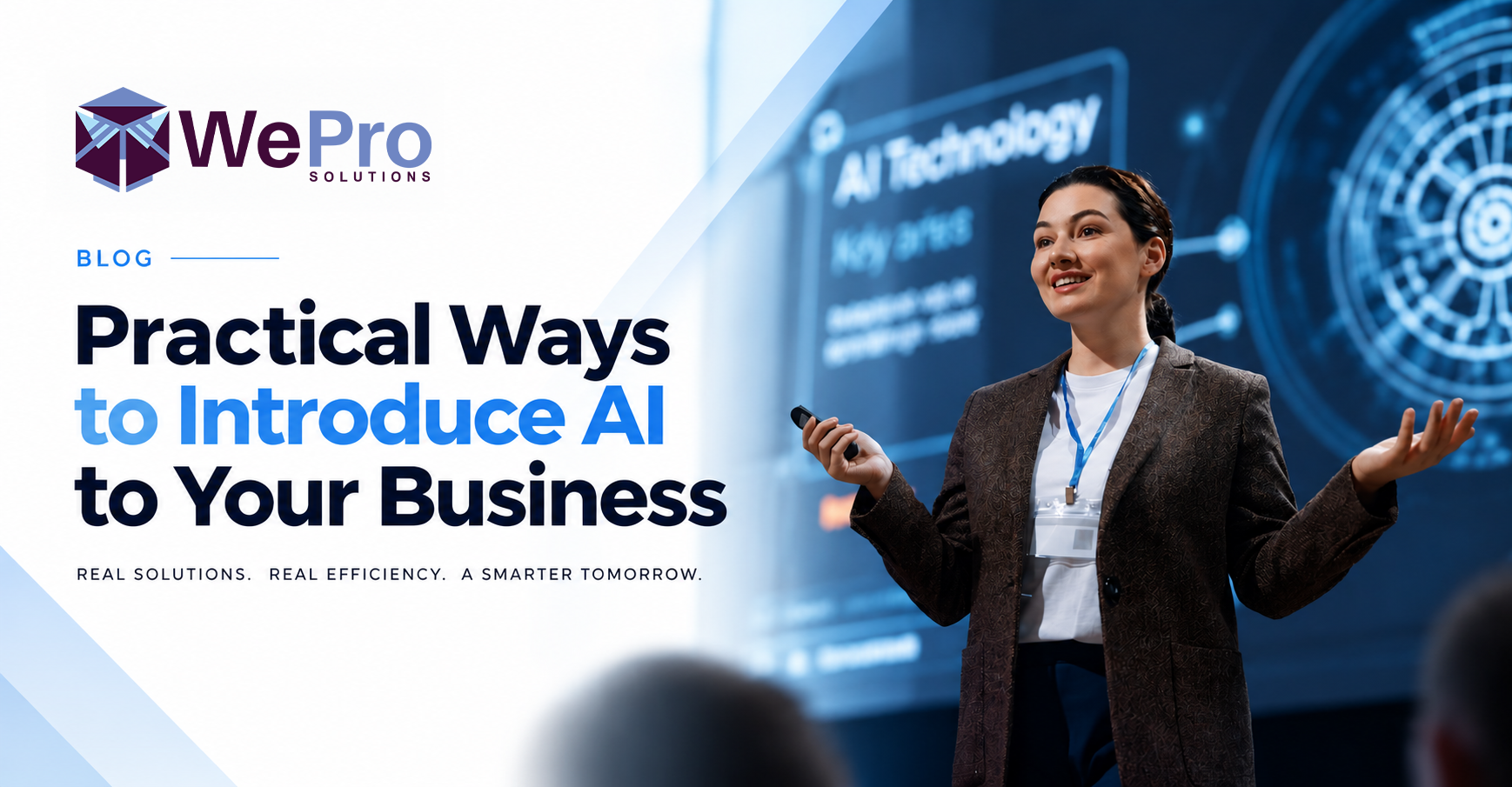
People might have mixed feelings about it, but AI is becoming a key tool for businesses to stay current and competitive. Regardless of size, industry, or location, AI has the ability to help improve your workflow and make daily life in the office easier – but figuring out how is the main thing.
Using AI in the workplace doesn’t mean you have to replace staff, invest in costly technology, or completely change your current system. Rather, the most successful uses of AI are those that fit into your current team and compliment your already-established operations.
The best way to introduce AI is to start small – find a problem or sticking point and implement an AI business solution, then grow from there. Knowing exactly what those look like can be tricky though, especially if you’re not looking for a complete overhaul.
Here are 6 practical ways you can introduce AI into your company:
Not every business problem needs an AI solution. Instead, you want to focus on the areas where the automation or support AI provides would make a meaningful difference for your company. Areas where you can get time back, support your employees, and reduce human errors are great starting points.
To find the right starting point, take time to evaluate your current operations – make note of repetitive or time-consuming tasks, bottlenecks in the workflow, and communication breakdowns. Then look at those struggles and think about if implementing AI tools could make an improvement. If so, start there.
But don’t feel like you need to incorporate AI into your business just for the sake of saying you use AI. Focus on your needs first – even if that means AI might not be the answer right now.
If AI is something you want to bring in, start small. Having one or two manageable tools is much easier to digest than reworking multiple systems at once. Start somewhere results can be measured, then move on from there.
One of the biggest benefits of AI for small businesses is using it to reduce manual, redundant, and time-consuming processes. Not only does it buy back time, but it can also help reduce the risk of human error, like something getting overlooked because they’re seeing the same process or task all day.
Some common AI automation tools include:
Having an AI system that takes care of these things frees up your staff’s time, meaning they can focus on the human element of your brand – making connections, coming up with new ideas, and fully using their skills.
When customers reach out to a company, they want answers fast. That’s hard to accomplish without having staff on call 24/7. AI offers that accessibility – making you reachable around the clock without people sitting at a computer waiting for messages to come in.
Not only does AI allow you to answer questions and provide constant support, it also makes communication more consistent. Now you don’t have to worry about each employee’s answers or directions being the same – chatbots ensure they are because it’s pulling from the information you gave it.
Tying into automation, AI chatbots also streamline your communication processes. It helps with things such as drafting responses, summarizing interactions, and organizing feedback, making it easier for you to go through what everyone is saying to and about your brand, without you having to read every message.
Keeping up with marketing trends – and coming up with fresh ideas – is a large task. And while you don’t want AI to completely take over the creation and implementation of your marketing strategies, it can help make the process smoother.
Here are some typical ways companies use AI to assist in their marketing and content creation:
You still want that human touch that real employees bring to the table in every area of your company, especially marketing. So, any ideas or content that you pull from AI, make sure your creative team looks over them and makes edits to ensure they align with your branding and are factually accurate.
Anytime you have to make a decision for your business, you want to do it with as much information and thought as possible. But sifting through all that relevant data can require more time than you have to make effective changes. AI allows you to work through information more efficiently so you’re making insightful, relevant choices.
While AI can help support your decision making by pulling and summarizing data, it can’t take away human judgement – especially from the people that have been working with your company and audience for long periods of time.
Some ways you can utilize AI for data include:
While AI might seem like part of your IT setup – and it is – it’s also a tool than can help you get the most out of your software and systems. It’s being used more frequently to support business technology and security, providing an additional layer of support to your cybersecurity and IT management plans.
AI can help strengthen your cybersecurity monitoring by identifying unusual activity and login patterns, detecting potential security threats, and providing faster responses when threats do strike.
It’s a useful tool to assist your IT team in keeping your company information secure, programs running smoothly, and providing your employees with more support.
As we’ve discussed, there are numerous ways you can start implementing AI into your business that will provide real results without causing more stress or massive overhauls. But not every tool is right for every company. You want to find the one that will best support your current system and solve the problems you’re facing.
Programs such as ChatGPT, Microsoft Copilot, AI-powered CRMs, and even AI features within the tools you already use all come with different costs and benefits. When deciding which one is best for your business, consider these factors:
These considerations will help you make the best choice for your business as you start your AI journey.
AI doesn’t have to be complicated, and introducing it to your business doesn’t have to happen overnight. The key is finding the areas where it can make a difference, choosing tools that work with your current setup, and giving your team time to learn them.
And as technology continues to evolve, finding ways to work smarter and make the most of the tools available can help your business stay competitive.
As a managed IT service provider, we fully understand how important AI is becoming for all businesses and industries. Our goal is to help companies better understand AI all around – what the transition means for their business, how they can safely implement it into their workflow, which programs are right for them, and how to handle the transition.
If you’re looking for an IT team to help you with AI integration or just want someone to walk you through how it could look for your business, send us a message! We’d love to talk with you and see if AI would be a good fit.