When you think of automation in business, your first go to might be AI or software. Then the thought becomes how expensive those are, that they’re replacing human jobs, or another hot topic that leads to heated conversations around the conference table.
But as technology evolves and digital reliance grows, a new thought is being raised:
Is not automating more expensive than buying in?
There are the obvious costs that come with buying into automation – new software, new hardware, trainings. But continuing to rely on manual processes comes with its own costs as well. And making the transition doesn’t come at the cost of human employees and their jobs. Instead, it gives them a chance to focus on higher-level work without productivity suffering.
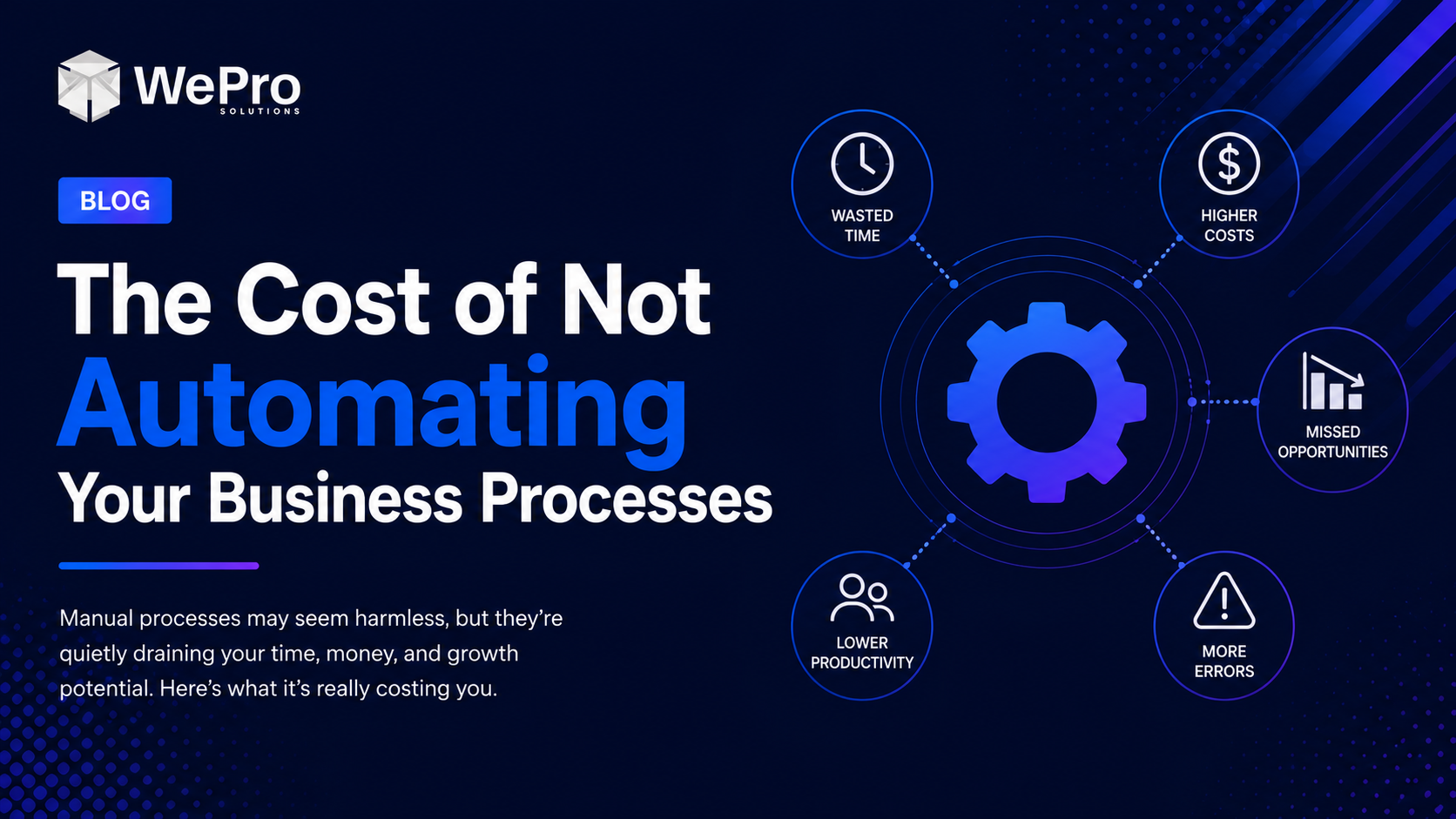
To help you see the bigger picture (and start to consider if automating is a good move for you), let’s break down six of the hidden costs you may be facing by relying on manual processes:
Think of all the little manual tasks you do throughout a workday – data entry, approvals, filing, reporting. While each task might not take up much of your time, when you add them all together, it’s a good chunk of your day. Now multiply that by all the people doing the same or similar jobs, and you realize that your team spends a good amount of time on repetitive tasks.
To help save your company time and money, you can automate these tedious tasks (such as scheduling, spreadsheet updates, and more). Then your team can spend more time on valuable, business growth items – things such as relationship building, data analysis, strategy creation, and revenue-generating assignments.
The more manual processes your team has to do, the higher the likelihood for them to make mistakes when doing them. And while most of these errors are small and harmless, they can quickly pile up and cause damage to your workflow, your reputation, and possibly even your finances.
Automated workflows for things such as invoices, data entry, and inventory reduces the possibility for errors because they aren’t happening manually by a team member over and over again. This improves your consistency and accuracy, while also ensuring you’re doing the best work possible for your clients.
While you might want one of your team members to respond to every single customer question, inquiry email, and message you receive, doing that increases the wait times. In today’s fast-paced world, that won’t work for most people. They expect fast service, so you have to respond as quickly as possible.
Having automated responses, an AI-chat feature, or something of the sort allows you to respond in a much more time efficient manner. This way, potential customers know they can easily get in touch with you about quotes, product questions, appointments, or any needs they may have. This leads to better customer experiences and better relationships.
It takes work to get sales – both from new and returning customers. You have to foster those relationships, and that takes continuous work such as following up on leads, sending reminders, and more. But keeping up with those tasks can quickly become a struggle because there’s so much that has to happen, and it needs to be done in a timely manner.
Implementing automation processes like CRM automation, lead routing, and email workflows will help you gain more sales and revenue because you’re following up with customers while your company is still on their mind, and reminding them that you’re there before they start forgetting.
The main goal for most businesses is growth. But reaching that new level can be harder to accomplish the more you do manually. Your typical processes won’t be able to keep up with the increased demand, and you’ll start running into issues that slow you down. To compensate, you’re hiring way more staff, struggling with inefficiencies, running into roadblocks, and likely facing more overhead.
Workflow automation makes it easier for your business to grow because it’s set up to handle the pressure without interrupting people’s workday. You can easily keep moving forward at the same pace without running into bottlenecks or worrying about how you’re going to keep up.
If you can’t see what’s going on in the inner workings of your business, you don’t know what struggles you’re facing and if you’re truly being successful or not. Without centralization (and automation), important company data is typically spread throughout emails, spreadsheets, paper files, and multiple software systems. This makes it hard to see the big picture.
Having centralized data and automated reporting makes it easier to track performance, analyze data, and get real-time insights on what’s going on with your company. This also leads to better, more strategic decision making because you’re studying the full picture when making plans, rather than trying to piece it all together as you go.
You might have a better understanding on how automation impacts business now, but knowing if you’re really ready to take the leap and implement it into your business is another story. To help you make that decision, here are some key things to be on the lookout for in your own company:
If multiple of these signs stick out to you, figuring out which to start with can be a struggle. But remember you don’t have to automate everything all at once. Small steps can make a big difference. Here are some ideas to get you started:
Automation may seem like a big undertaking that you’re not totally on board with. But in today’s world, not doing it can hinder your growth and lead to more issues. But once you make the investment, you can see improved efficiency, fewer errors, fasters responses, and have an easier time scaling your business.
If you’re ready to look at your current setup and see where automation may fit in, we’re here to help you assess our workflow and figure out where you would see the most benefit from it. Then once you’ve decided on a path forward, we’re here to get it implemented for you and help you understand how it works!