Much like every other part of life, businesses are becoming increasingly technology dependent. And this evolution is great – when it works in your favor.
For technology to truly work for your business, it needs to do more than just house your operations. It needs to support growth, enhance efficiency, and improve your customer satisfaction levels. But it can only do this if you know how to use it properly.
When technology isn’t used to its full potential, it can lead to more issues than rewards, such as downtime, increased costs, security risks, and overall poor performance. And sometimes these things happen without you realizing you’re the cause.
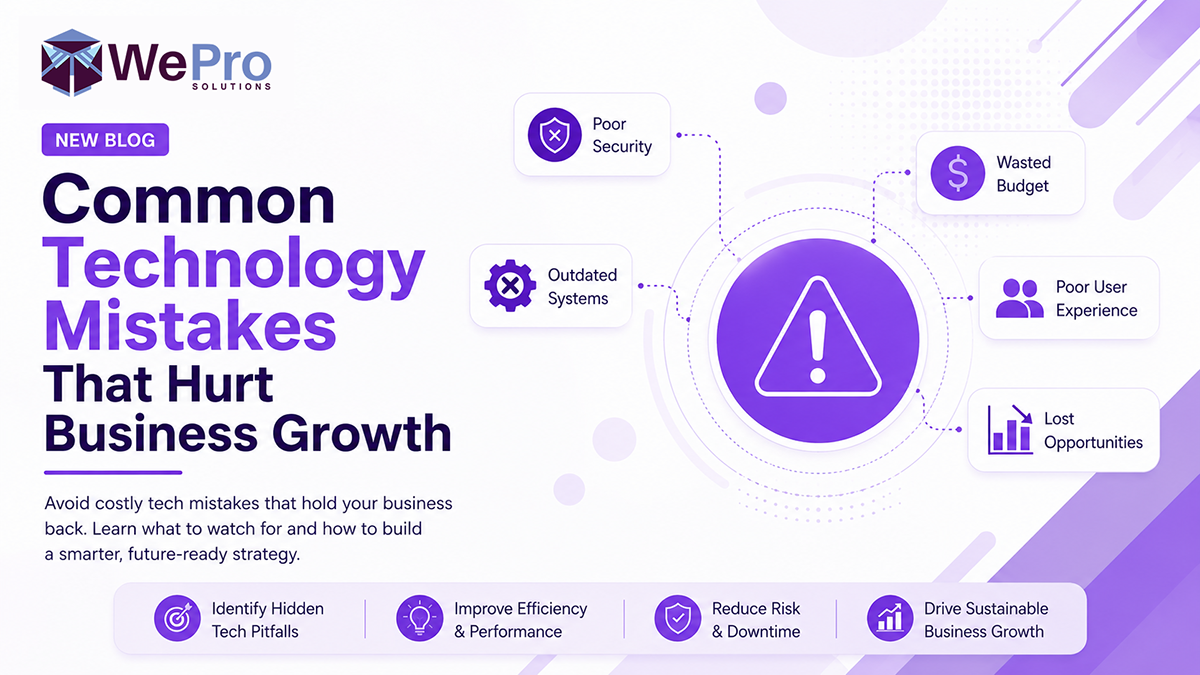
To help keep your business from falling behind, let’s break down 10 of the most common technology mistakes companies make and how to avoid them.
When you find a system and setup that works for your business, it’s easy to stick with that overtime and not feel the need to update it or make changes. But when you’re using software, technology, or devices that aren’t current, you’re likely dealing with slower performance and have more security risks (because it’s easier for hackers to get into older systems). Another major issue is that eventually you might run into compatibility with plugins, apps, or other software you use to run your business.
The easiest way to avoid outdated software is to keep up with system and hardware updates. That means knowing when updates are happening and staying current with them (or having auto-updates turned on) and using supported software versions.
Cybersecurity is an ever-growing concern as hackers get smarter. And the more technology you use, the more at risk you are for cyber attacks. When you don’t put an emphasis on cybersecurity, you’re opening yourself and your business up to an increased risk of ransomware attacks, data breaches, and compliance issues. And not to mention the financial and reputational hit you could take if a hacker got into your system.
The main ways companies forget about cybersecurity are with weak password practices, not using multi-factor authentication, outdated software, and not properly training employees. By focusing on these areas, as well as performing routine security assessments, you can increase your company’s security levels.
Having access to your internal information and the data you need to run your company is critical every day, but especially when something goes wrong. Between cyberattacks, natural disasters, and even human error, the likelihood that you need that info but can’t get to it at some point is high. And if you don’t have recent, accessible backups, you’re facing business interruptions and downtime.
The easiest way to ensure you always have a recent backup is to use automated backups. This will ensure they happen frequently without you having to remember to manually take them. You also want to check your backups – and recovery processes – regularly so you know everything is working properly.
Your website is your window to the world in today’s digital age. If it isn’t working properly then you’re costing yourself awareness, leads, and sales. Things like slow load times, broken links, bad design, outdated content, and not being mobile friendly are web issues that can have a big impact on your business.
Your website needs regular updates to truly be a benefit to your business. Content and design updates, speed checks, responsiveness tests – all of these are key to having a strong, engaging website that will help boost your business online (and your SEO scores as well).
It takes a lot to get work done the way you really want and need. But if that means you’re using a large number of tools and platforms that don’t communicate and work together, then you’re really creating more work for yourself. Having too many operational tools can increase your technology and maintenance costs, make reporting more difficult, and lead to possible data errors.
Take a deep dive into your current IT stack and look at what each program really does for your business. From there, you can consolidate similar programs to minimize cost and workflow while increasing productivity and integration.
When you don’t take the time to create an IT plan and strategy map, you’re really working with reactive IT. Which can be helpful, but also means you’re less focused on preventing issues and instead taking care of them when they do occur. This can cost more money and be harder to scale, because your current setup might not align with future goals and needs.
When you sit down to map out the future of your business, make sure to include IT in that conversation. This includes thinking of future hardware you might need, the budget you have available, and the tools you want to use. Doing this will allow you to anticipate problems and needs before they arise, while also supporting more long-term growth.
Just because people are more comfortable with technology in today’s world doesn’t mean they know how to truly use it properly, especially in the workplace. By not having employee IT and cybersecurity training, you’re increasing your risk for human error – and have tools they might not know how to fully use.
The easiest way to overcome this issue is to offer continuous IT training, as well as having clear technology policies in place. This makes it easier for people to know how to use things and how to increase their security.
New technology and devices are coming out what feels like constantly. While you don’t need to update your hardware every time something new comes out, putting off upgrades for longer than you should can lead to problems. Things like security and productivity suffer and can be more expensive to deal with on older devices.
If you start noticing things such as frequent downtime, slow systems, and difficulty using devices, it might be time to invest in new technology. This ties in with planning – knowing when you have room in the budget for upgrades can make future purchases less stressful.
When you make decisions that aren’t backed with data and insight, you’re taking a shot in the dark and hoping it sticks. This can lead to wasted time, money, and resources – and do nothing to support your overall goals.
Taking time to dive into your web and digital analytics – and understand what they’re telling you – can help you make stronger decisions that are more likely to land with your audience and keep business running smoothly. Look at things such as web traffic and conversions, uptime, security incidents, and productivity levels and make decisions based off those.
Having an internal IT team has its perks. But as your technology needs grow and develop, they might eventually become overwhelmed with the amount of support your team needs – or not have the expertise to handle everything that is thrown at them. This can lead to burnout, bad setups, and more downtime risks.
Knowing what – and when – to handle internally versus working with an external partner for is the key to a truly successful IT setup. If you’re having more security concerns, need major infrastructure upgrades or overhauls, want to create a full IT plan, or are trying to tie in your website and digital marketing efforts, working with an outside team can be a major benefit to your company. They will free up your internal team’s time so they can focus on the normal day to day, while ensuring you get high-quality help to reach your goals.
Technology should be an asset to your company, not an obstacle you have to overcome to get the job done. By understanding common mistakes businesses make and staying vigilant for them, you’re improving your productivity, security, and long-term growth opportunities.
By staying proactive, you can continue to focus on your customers and reaching your goals with less worry about your technology setup.
As a managed IT service provider in Texas, you can trust that we understand the important role technology plays for every business. That’s why we work with clients to optimize their setup, keep it running smoothly, and ensure they are equipped with a scalable system that support their growth.
If you’re looking for an IT partner that will help you avoid these mistakes, send us a message! We’d love to work with you!