Technology has become a pillar of business in today’s digital world. With that, your IT infrastructure is one of the most important parts of your company.
It’s one of the key areas of where operations take place, where communication happens, where data is stored, and so much more. And because it does so much for you, you need to have the right team overseeing it.
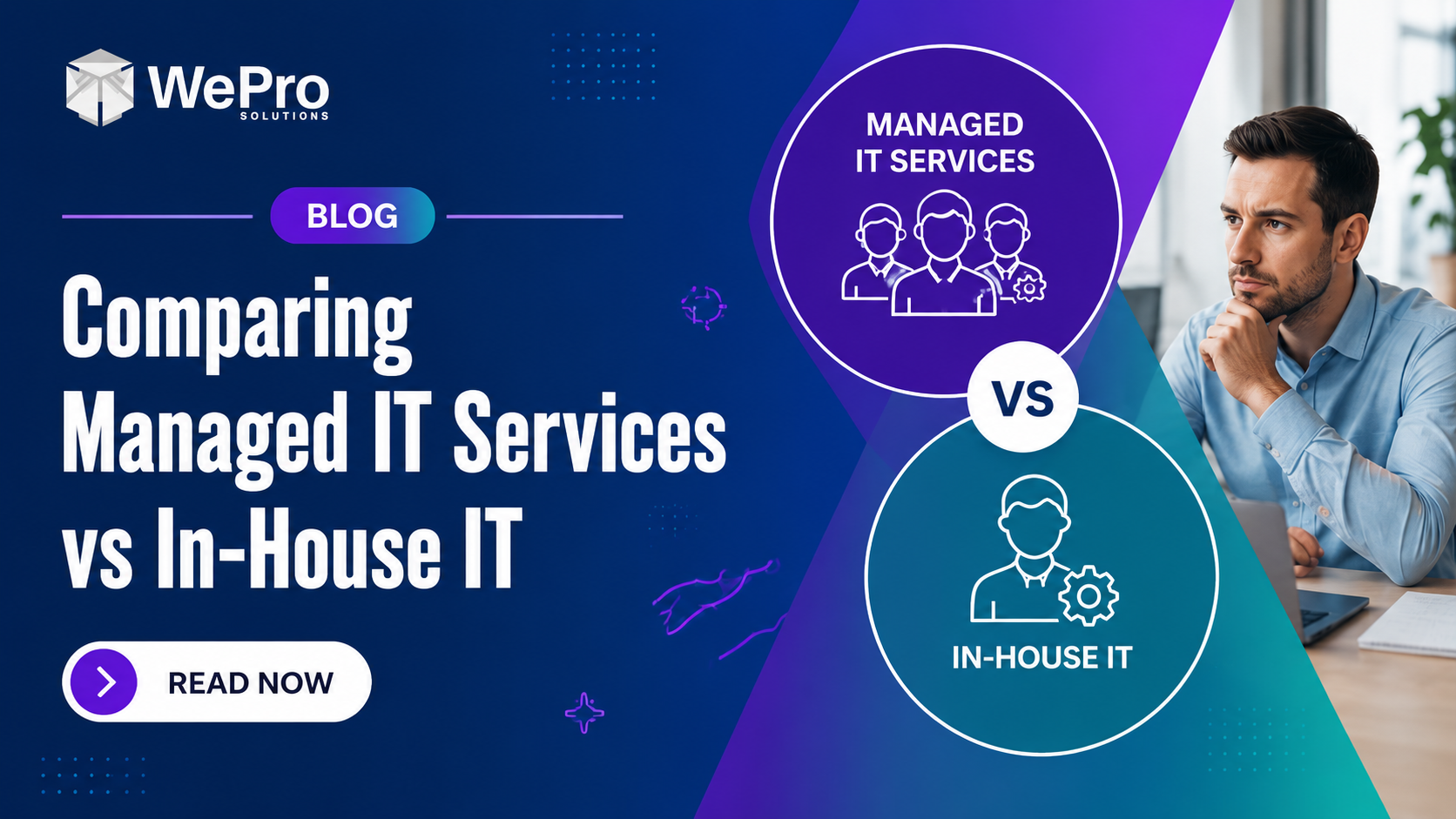
There are two main approaches to IT for businesses – managed IT services and in-house IT.
Each approach offers a variety of pros and cons based on factors such as cost, time commitment, expertise levels, and scalability. And ultimately the right choice for your business lies in what you need and how you need it completed.
Let’s break down the specifics of each approach so you can make the best choice possible for your company moving forward.
What are Managed IT Services
Working with an external partner for your IT needs – including the typical planning, setup, management, and maintenance – is the core of managed IT services. It’s outsourced IT support, providing you with access to experts without having to have them working for you full time.
The managed IT service provider works with you to ensure you have the support you need and do things proactively to help mitigate problems early rather than waiting until they’ve happened to take action.
When you work with an IT partner, they typically handle all the tasks an in-house IT team would, while also being able to provide specialty support when needed because they’re less bogged down in the day-to-day of your company. Common services include:
What is In-House IT
When you handle all your IT needs – both proactively and reactively – with an internal team, that’s in-house IT. You have members of your daily staff that are responsible for your IT infrastructure, handling the day-to-day support, as well as technology setup, ongoing management and maintenance, cybersecurity efforts, and more.
These IT professionals typically have less specialized expertise, but have the capabilities to handle a wide variety of responsibilities, acting as your go to for all technology, security, and data needs.
An in-house IT staff offers many of the same services an external partner would, while also having more typical day-to-day responsibilities. Some of these include:
Pros & Cons of Managed IT Services
Working with an external partner for any part of business, especially one with the size and importance of your IT setup, comes with a variety of benefits and drawbacks.
Advantages of Managed IT Services:
Disadvantages of Managed IT Services:
Pros & Cons of In-House IT
Having an in-house IT team might seem like the better or harder option for your company, depending on what you’re needing.
Advantages of In-House IT:
Disadvantages of In-House IT:
Cost Comparison – Which is More Affordable?
Ultimately money is a big decision-making factor for all things in business. Choosing the ideal IT approach is no different. They each come with typical costs that decide what services you get, as well as when and how much you have to pay.
The costs for having an in-house IT team is primarily focused on the same costs you expect for any other staff member – things such as salaries, benefits, trainings, and tools required to complete their job. This means you’re likely spending more money over time, but those costs are also more set. You get to decide if the price changes, rather than being forced into paying more or less.
Managed IT services are usually more subscription based, meaning you pay for the external team to handle your IT needs on a pre-determined schedule (monthly, quarterly, etc.). This could mean paying for so many hours of work within that timeframe, certain tasks to be completed, having full-coverage, or something in between.
While the typical costs are pretty clear, the hidden costs are where the decision starts to get trickier. Things such as downtime if things go wrong, on-going security risks, and even additional tools needed over time start to add up and cost you more money than originally planned.
To really decide which path is more affordable, you have to look at the big ROI picture – which option is going to provide you with the best upkeep, security, and management so you don’t have to pay more to save business later? And that answer still varies from company to company.
Which Option if Best for You?
Because every business has a different structure and list of needs, determining the best route for your IT support might look different than other businesses in your industry. Here’s a general guideline you can follow if you’re still trying to decide:
Choose Managed IT Services if:
Choose In-House IT if:
Hybrid IT Approach
It’s becoming more common to see business rely on a best of both worlds system for their IT needs, meaning they have an in-house IT team, while also working with a managed IT service provider for specific needs.
This co-managed IT approach allows you to have more control over your IT setup, while still having access to experts in the areas you’re struggling with – maybe cybersecurity, network setup, data migration, or anything of the sort. While this may seem like a more costly setup, it ensures you have all the help you need to have a successful IT program.
In the end, there’s no one-size-fits-all solution when it comes to IT support. The right choice depends on your business size, budget, goals, and the level of support you need to keep operations running smoothly.
Whether you choose a fully in-house team, managed IT services, or a hybrid approach, the goal is the same – creating a reliable, secure, and scalable IT environment that supports your business both now and in the future. Taking the time to evaluate your current needs and long-term growth plans can help you make the best decision for your company moving forward.
How We Can Help
We fully understand how important IT is to businesses, which is why we’re dedicated to helping companies have the setup that’s right for them. Whether you’re looking for someone to overhaul your system, setup your devices, or just help you figure out what you might be missing, we’re ready to serve you!
Our managed IT services are designed to give companies peace of mind that their technology is secure and working properly. If you’re ready to hire an external partner or have questions about the right path for your business, send us a message!